
Find the right data protection service for your business
EU External Data
Protection Officer
Where your processing activities meet the Article 37 criteria, appoint an external Data Protection Officer for independent GDPR advice, monitoring, and supervisory-authority communication.

Practical support, clearly scoped
European Union · GDPR Articles 37–39
Plans and inclusions
EU Data Protection Officer: pricing and service scope
Compare the subscription total, payment schedule, and included capacity before choosing your plan. All amounts are in EUR.
- Independent DPO appointment
- GDPR advice and monitoring
- DPIA support
- EU authority contact point
Setup fee: none. The first subscription payment follows the billing schedule you select.
| Company size | Annual billing | Monthly billing | Included capacity |
|---|---|---|---|
| Growth< 10 employees | €249/month €2,988 billed annually Choose annual | €498/month Billed monthly Choose monthly | 2 cases / year Response target: 3 business days |
| Small10–49 employees | €449/month €5,388 billed annually Choose annual | €898/month Billed monthly Choose monthly | 6 cases / year Response target: 2 business days |
| Medium50–249 employees | €899/month €10,788 billed annually Choose annual | €1,798/month Billed monthly Choose monthly | 18 cases / year Response target: 1 business day |
| Large250–749 employees | €1,690/month €20,280 billed annually Choose annual | €3,380/month Billed monthly Choose monthly | 60 cases / year Response target: Priority response |
| Enterprise750+ employees | Custom pricing Discuss Enterprise | Custom case volume Response target: Dedicated SLA | |
Annual prices show the monthly equivalent of an upfront annual subscription. Response targets describe the service response, not a guaranteed resolution time or an extension of a legal deadline. Suitability, taxes, engagement terms, and additional work are confirmed during checkout and onboarding.
Before the appointment starts
Confirm your legal entity, processing activities, jurisdictions, contacts, and open deadlines. Agree the mandate and access arrangements, then establish the contact and reporting route for the selected service.
When additional work is needed
Tell us about expected case volumes and any implementation, urgent incident, or specialist project. Work beyond the selected plan is agreed separately; the subscription does not provide unlimited professional time.
Independent GDPR oversight without internal conflict
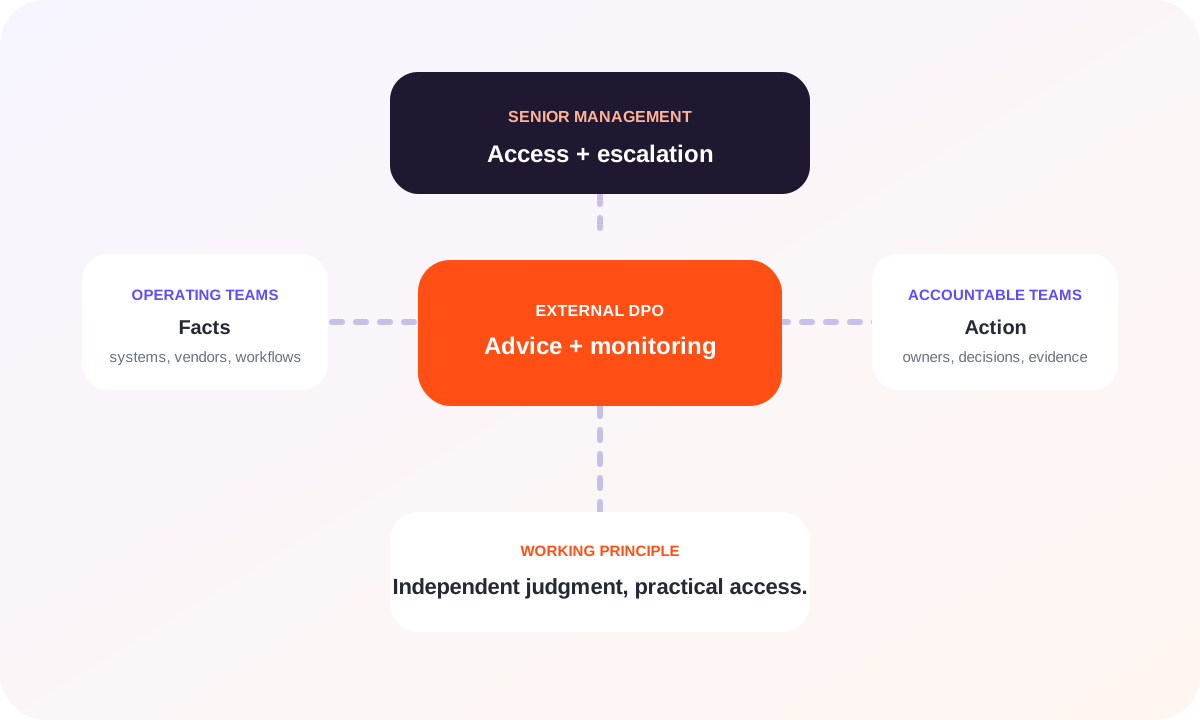
An external DPO can support the independence, access, and reporting arrangements required under Article 38 GDPR when the appointment is structured appropriately. The role can strengthen your wider Privacy Governance Framework while providing senior privacy expertise on demand.
Our EU external DPO service supports organisations whose assessment indicates that a DPO is required, as well as organisations that choose independent monitoring without recruiting a full-time executive role.
Why organisations appoint an external DPO
Internal appointments often create conflicts of interest when the same person both runs operations and monitors compliance. Outsourcing the DPO role removes that structural risk and gives boards a defensible oversight model.
The Necessity of Independence
The Data Protection Officer is a unique corporate role defined by law. The Data Protection Officer operates within the organization but must remain independent of executive pressures when assessing compliance. This statutory independence is frequently the Achilles' heel for companies attempting to appoint internal staff to the role.
Conflict-of-interest analysis is fact-specific. Article 38(6) prevents other duties from creating a conflict with DPO tasks; an external arrangement can reduce that risk when responsibilities, reporting lines, resources, and access are documented.
Our Data Protection Officer Service Delivery Model
When you appoint The Data Protection Officers, the designated DPO, supporting professionals, responsibilities, reporting lines, and service scope are documented in your service arrangement.
- Ongoing monitoring: We support regular review of processing changes and your Records of Processing Activities (RoPA); your organisation remains responsible for maintaining its records.
- DPIA support: Where a Data Protection Impact Assessment (DPIA) is required, we provide advice and documented risk-mitigation input within the agreed scope.
- Authority liaison: We support agreed communications with the supervisory authority, including during incidents or investigations, within the written mandate and service scope.
What the appointment changes in practice
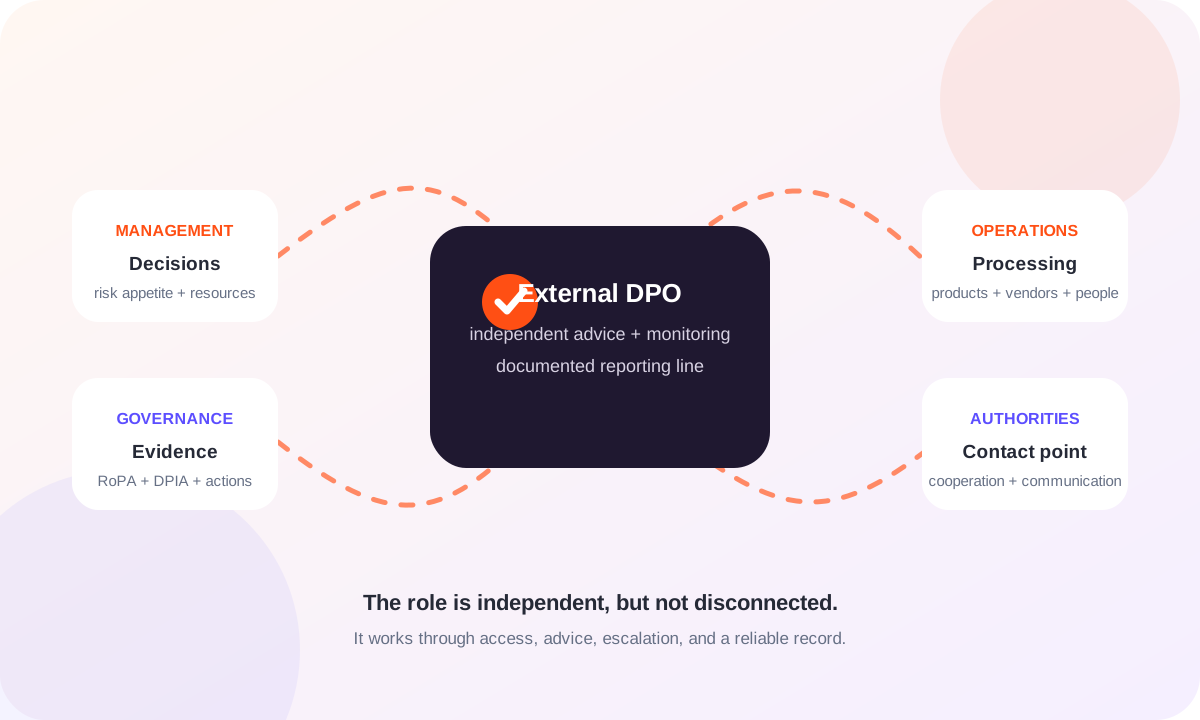
A DPO appointment should change how privacy questions move through the organisation. Instead of treating every question as an urgent legal escalation or leaving decisions inside one overloaded team, you establish a visible route for advice, review, challenge, and management reporting. The DPO can help identify which questions need a formal assessment, which can be answered through an existing policy, and which require a decision by the controller or processor.
That operating rhythm matters when processing is spread across product, engineering, security, marketing, people operations, procurement, and customer support. A privacy team may know the framework but not the system configuration. An engineering team may know the data flow but not the transparency commitment. The DPO brings those facts together without taking ownership of the operational decision that belongs to the organisation.
The result is not a promise that every privacy risk disappears. It is a clearer decision model: the relevant facts are gathered, the people affected are considered, the legal and practical options are recorded, and an accountable owner decides what happens next. That is the difference between having a name in a notice and having a DPO function that can be used by the business.
Where an external DPO creates the most value
An external appointment is particularly useful when your organisation has meaningful EU processing but does not need, or cannot yet justify, a full-time internal DPO team. It can also help a growing company move from founder-led privacy decisions to a repeatable governance model with a defined escalation route and documented management access.
Common triggers include launching a product that monitors individuals at scale, expanding into a sensitive-data market, replacing a processor, responding to a customer security questionnaire, reviewing a large new vendor, preparing for a regulator enquiry, or discovering that the privacy notice no longer reflects the product. The service can start with one priority rather than requiring a complete programme before useful work begins.
The appointment also helps groups operating across several EU countries coordinate one DPO function while keeping local facts visible. A single arrangement may be workable where accessibility, expertise, language, time zones, establishments, and supervisory relationships are properly considered. The answer is not determined by the number of countries alone; it depends on whether the DPO can perform the role effectively for the organisation's actual operations.
- Product and technology teams: advice before a material feature, dataset, tracking tool, or vendor change is approved.
- Leadership teams: concise reporting on material risks, open decisions, incidents, resources, and overdue actions.
- Customer-facing teams: reliable evidence and explanations when a customer asks how EU privacy responsibilities are managed.
- People and operations teams: a route for recurring questions about monitoring, access, retention, requests, and internal procedures.
What a working month can look like
A useful DPO service is made of recurring contact points and focused reviews, not a large document delivered once a year. At the start of the service we agree the current priorities, key contacts, decision calendar, open incidents, and the evidence that needs to be brought up to date. That creates a manageable queue instead of an undefined promise to monitor everything.
During a typical month, the work may include reviewing a new processing proposal, answering a question about a processor or international transfer, checking progress on a DPIA action, joining a product or security meeting, updating an advice log, or preparing a short management summary. The mix changes with your business. A company in a launch period needs different attention from a mature organisation working through remediation after an incident.
The service is designed around the package you select. Your plan determines available capacity, included case volume, response target, and the amount of professional time that can be reserved for planned reviews. Urgent matters, additional projects, and work outside the agreed scope can be discussed separately rather than being hidden inside an unclear monthly retainer.
We also distinguish advice from approval. The DPO can recommend safeguards, explain consequences, challenge an assumption, and identify unresolved risk. The controller or processor remains responsible for deciding the purpose and means of processing and for implementing its decision. Making that distinction explicit protects both the independence of the role and the organisation's accountability.
Evidence the DPO should be able to work with
The quality of DPO advice depends on the quality of the operating facts. A complete legal library cannot compensate for an outdated view of the systems, vendors, data categories, retention periods, access paths, or customer commitments. We therefore start with the evidence that is relevant to the question rather than asking every client to produce a perfect privacy archive before work can start.
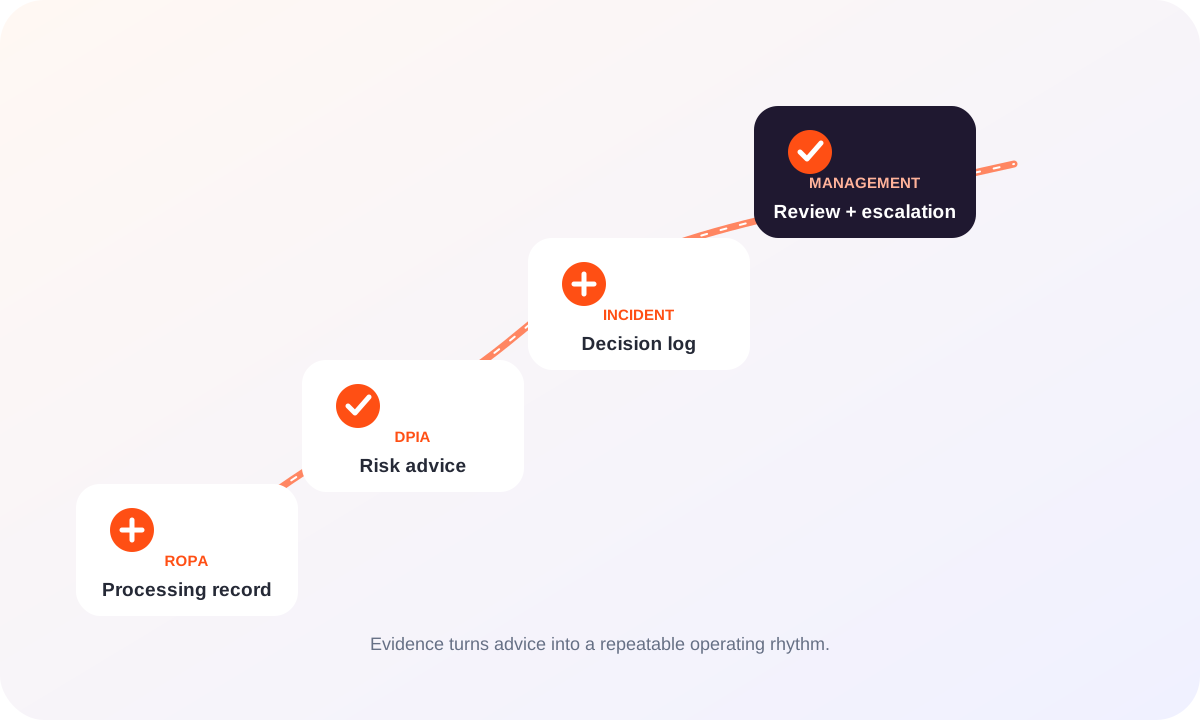
Useful starting material can include a current or draft RoPA, product and architecture descriptions, vendor and subprocessors lists, privacy notices, internal procedures, records of previous rights requests, incident records, DPIAs, security control summaries, contractual commitments, and the names of the teams responsible for each decision. Where information is missing, the gap should be recorded as a gap rather than quietly filled with an assumption.
For a DPIA, the important output is not a decorative form. The assessment should explain the processing, the people affected, the necessity and proportionality questions, the potential impacts, the safeguards, the residual risk, and the decision or consultation route. For an incident, the record should show the known facts, affected data and people, potential consequences, actions, communications, and the reasons for the notification decision.
The DPO can help turn those materials into a repeatable evidence set: an advice log, action tracker, review calendar, decision record, or management report. The exact documents depend on the organisation. The principle is consistent: someone should be able to understand what was considered, who owned the decision, what remains open, and when the issue needs to be reviewed again.
What the external DPO does not take away from you
Appointing an external DPO does not transfer the controller's or processor's accountability to the service provider. Your organisation still needs to make lawful processing decisions, provide resources, maintain accurate records, implement safeguards, respond to data subjects, manage vendors, and act on agreed improvements. The DPO's value is stronger when those responsibilities are clear rather than delegated by implication.
The service also does not replace specialist work that falls outside the agreed DPO scope. Technical forensics, litigation representation, tax advice, employment advice, security engineering, and broad commercial legal work may require other professionals. We identify those boundaries early so that a privacy issue is routed to the right expertise instead of being presented as solved because a DPO has been appointed.
This boundary is commercially useful. It gives the service a defined price, a clear response target, and a realistic working relationship. If your needs change, the service can be expanded, paired with a focused GDPR compliance programme, or connected to a specialist service such as data breach management.
Choosing the right package
Choose a package based on the work your organisation needs to move, not only on employee count. Employee count can be a useful starting signal, but case volume, product change, geographic coverage, vendor complexity, incident exposure, and the availability of internal owners may matter more. A small team with a high-volume consumer product can create a more demanding DPO workload than a larger business with stable, limited processing.
The Growth package can suit an organisation that needs a defined external DPO route with lower case volume and a smaller review rhythm. Small and Medium packages provide more room for recurring questions, documentation reviews, DPIA support, and active programme work. Large plans are intended for higher-volume or multi-brand environments. Enterprise requirements are discussed directly because a fixed online package may not describe the necessary capacity or governance model accurately.
You can select a package and billing term on the order page. Before the appointment begins, we confirm the scope, eligibility, contacts, onboarding information, response expectations, and any important exclusions. If your situation needs both an external DPO and a separate EU representative, those are assessed as different roles and can be selected as separate products where appropriate.
Questions to resolve before appointment
Before you appoint the DPO, identify who will provide access to the information needed for the role and who will receive recommendations. The DPO should not have to discover your organisation's decision structure after an incident begins. A named senior contact, operational contacts, a route to relevant records, and a practical meeting rhythm make the appointment usable from the first week.
It is also worth checking whether any proposed DPO duties could create a conflict. People who decide the purposes and means of processing, lead security operations, own marketing systems, or approve product data use may have responsibilities that need to be separated from the independent monitoring role. The assessment is fact-specific, and the reporting and access arrangements should be documented rather than assumed.
Finally, decide what success should look like after the first quarter. It may be a current RoPA, a completed priority DPIA, a tested rights-request route, a clearer breach playbook, a management report, or a set of actions with owners and dates. Defining that first result gives the DPO and the business a concrete starting point while leaving room for the ongoing role to develop with the organisation.
The official framework and your specific facts
The original EU GDPR text sets out the designation situations in Article 37, the position and safeguards for the role in Article 38, and the tasks in Article 39. You can read the official GDPR text on EUR-Lex. Those provisions provide the framework; they do not answer every organisation's question without looking at its core activities, scale, monitoring, data categories, establishments, and governance arrangements.
This page is commercial information about an external DPO service, not a conclusion that your organisation is legally required to appoint one. We confirm the role, scope, and appointment structure against your facts during onboarding and document the agreed service before ongoing work begins.
Statutory Framework: Data Protection Officer Designation & Tasks
GDPR Articles 37–39
- Article 37(1): Designation of the data protection officer
Requires a DPO in specified situations, including public authorities and certain large-scale monitoring or sensitive-data processing activities. The assessment depends on the organisation's core activities and facts. - Article 38(3): Independence
"The controller and processor shall ensure that the data protection officer does not receive any instructions regarding the exercise of those tasks. He or she shall not be dismissed or penalised by the controller or the processor for performing his tasks. The data protection officer shall directly report to the highest management level of the controller or the processor." - Article 39(1): Tasks of the data protection officer
Includes informing and advising on obligations, monitoring compliance, assigning responsibilities, awareness-raising and training of staff, providing advice on DPIAs, and cooperating with the supervisory authority.
How the service works
Our external DPO service integrates into your governance model in four stages:
Appointment & scope
We confirm eligibility, define the DPO mandate, and document the appointment.
Compliance baseline
We review your RoPA, notices, policies, and processing risks.
Ongoing monitoring
We provide advice, monitor material changes, and support DPIAs.
Authority liaison
We act as the contact point for EU supervisory authorities where required.
Reduce internal conflict risk with an external DPO
Structure an external Data Protection Officer appointment with documented independence, access, reporting lines, and service scope.
View EU DPO pricingProduct snapshot
| Role | External Data Protection Officer |
| Regulation | GDPR Articles 37–39 |
| Supervisory authority | EU data protection authorities |
| Setup fee | None |
| Pricing | Compare annual and monthly plans above |
In practice
See what you can expect
Each view shows a different part of the buyer journey: the evidence, decision, working route, safeguards, and review point behind the service.





Frequently Asked Questions
Common questions about appointing an EU external DPO.
When is appointing a Data Protection Officer mandatory under GDPR?
Under Article 37, a Data Protection Officer is mandatory if: (a) processing is carried out by a public authority; (b) core activities consist of regular and systematic monitoring of data subjects on a large scale; or (c) core activities consist of large-scale processing of special categories of data (Article 9) or criminal conviction data (Article 10).
Can we appoint an existing employee as our Data Protection Officer?
Yes, if the employee has the professional qualities and resources required for the role and their other duties do not create a conflict of interest. Article 38(6) requires the organisation to assess the proposed duties and reporting arrangements before confirming the appointment.
What are the advantages of outsourcing the Data Protection Officer role?
An external appointment can support Article 38 independence when the mandate, reporting lines, resources, and working arrangements are structured appropriately. It also provides access to a wider team and avoids the overhead of recruiting a full-time specialist.
What exactly does the Data Protection Officer do?
According to Article 39, tasks include: informing and advising the controller/processor and employees; monitoring compliance with GDPR and internal policies; providing advice on DPIAs (Article 35); and acting as the contact point for the supervisory authority.
Is the Data Protection Officer personally liable for GDPR non-compliance?
The controller or processor remains responsible for its compliance obligations. The DPO advises and monitors rather than taking over the organisation's responsibility; the appointment, employment, and applicable national-law position should still be reviewed on their own facts.
Can an external DPO also be our Article 27 representative?
These are different legal roles. We assess whether both are needed and ensure appointments remain structurally sound.
Before you choose your service
External Data Protection Officer Costs: Plans, Billing and Scope
Compare external Data Protection Officer prices, annual and monthly billing, included cases, response targets, and the work to budget separately.
Read the guide →Internal vs External Data Protection Officer: Which Fits Your Business?
Compare internal and external Data Protection Officers on independence, capacity, cost, accessibility, and the practical steps for a successful handover.
Read the guide →EU Data Protection Officer by location
Explore practical business scenarios, preparation steps, and the relevant jurisdiction for your location.
- ParisFrance
- LyonFrance
- MarseilleFrance
- BerlinGermany
- MunichGermany
- FrankfurtGermany
- HamburgGermany
- AmsterdamNetherlands
- RotterdamNetherlands
- BrusselsBelgium
- AntwerpBelgium
- DublinIreland
- MadridSpain
- BarcelonaSpain
- ValenciaSpain
- MilanItaly
- RomeItaly
- LisbonPortugal
- PortoPortugal
- ViennaAustria
- CopenhagenDenmark
- StockholmSweden
- HelsinkiFinland
- WarsawPoland
- PragueCzechia
- Luxembourg CityLuxembourg
- BucharestRomania
- BudapestHungary
- AthensGreece
- SofiaBulgaria
- TallinnEstonia
- VilniusLithuania
Appoint your EU external DPO
Put independent GDPR oversight in place with a qualified external Data Protection Officer.
Select EU DPO pricingDisclaimer: This content is for informational purposes only and does not constitute legal advice or create a solicitor-client relationship. Data protection regulations are subject to change and specific application depends on the context of your processing activities. Please consult directly with our legal team for advice tailored to your organization.